Buildings, bridges, industrial plants, warehouses, and other infrastructure are designed to withstand years of use and environmental exposure. However, factors such as aging, heavy loads, weather conditions, poor construction practices, and natural disasters can gradually weaken structural integrity. Without timely evaluation, minor defects can develop into serious structural failures, leading to costly repairs, operational downtime, or safety risks.
In Oman, these risks are intensified by local conditions. High temperatures, coastal humidity and chloride- and sulphate-rich soils and groundwater accelerate reinforcement corrosion and concrete deterioration. Cyclone Gonu (2007) and Cyclone Shaheen (2021) also showed how severe weather can damage buildings and infrastructure. Many buildings constructed in the 1980s and 1990s are now at an age where a professional assessment is essential.
This is where professional structural assessment services become essential. A comprehensive structural assessment helps identify hidden defects, evaluate the condition of a structure, and recommend appropriate maintenance or repair measures before problems escalate.
Whether you’re a property owner, contractor, consultant, or facility manager, investing in expert structural assessment services ensures your assets remain safe, compliant, and durable for years to come.
What Are Structural Assessment Services?
Structural assessment is a detailed engineering evaluation of a building or infrastructure to determine its strength, stability, and overall condition. Qualified structural engineers inspect structural components, analyze load-bearing capacity, review construction quality, and identify signs of deterioration or damage.
Professional assessments may include:
- Visual structural inspections
- Crack mapping and analysis
- Concrete condition assessment
- Steel structure inspection
- Foundation evaluation
- Load-bearing capacity analysis
- Structural health monitoring
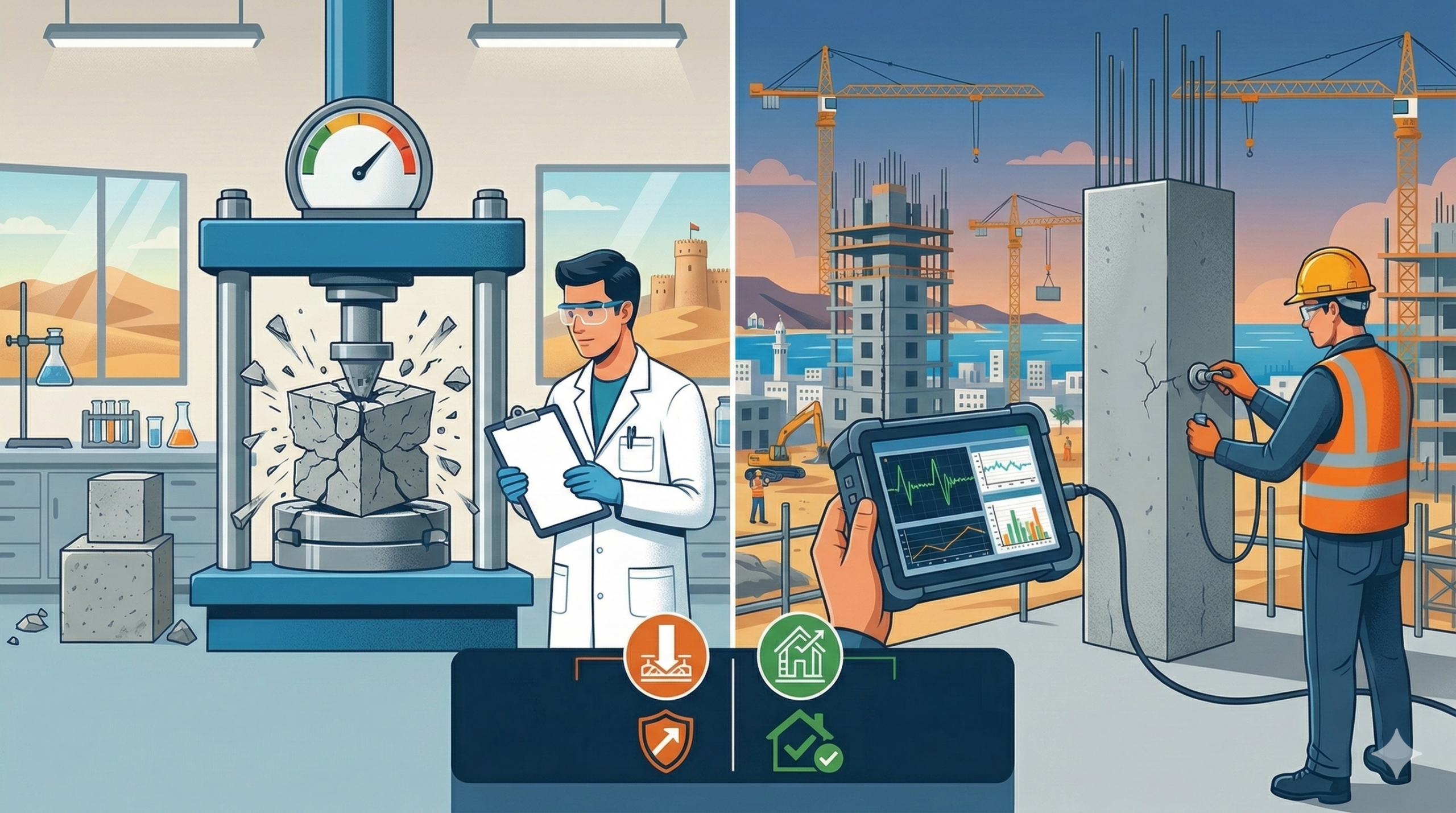
- Non-destructive testing (NDT)
- Material sampling and laboratory testing
- Structural safety recommendations
The results help owners make informed decisions regarding repairs, strengthening, renovation, or continued use.
Why Structural Assessments Are Important
Even well-designed structures require periodic evaluation throughout their lifecycle. Professional assessments help:
- Detect hidden structural defects early
- Prevent major failures
- Improve occupant safety
- Extend the lifespan of buildings
- Reduce maintenance costs
- Meet regulatory and engineering standards
- Support renovation and expansion projects
Routine structural evaluations are especially important for aging buildings, industrial facilities, bridges, commercial complexes, and public infrastructure.
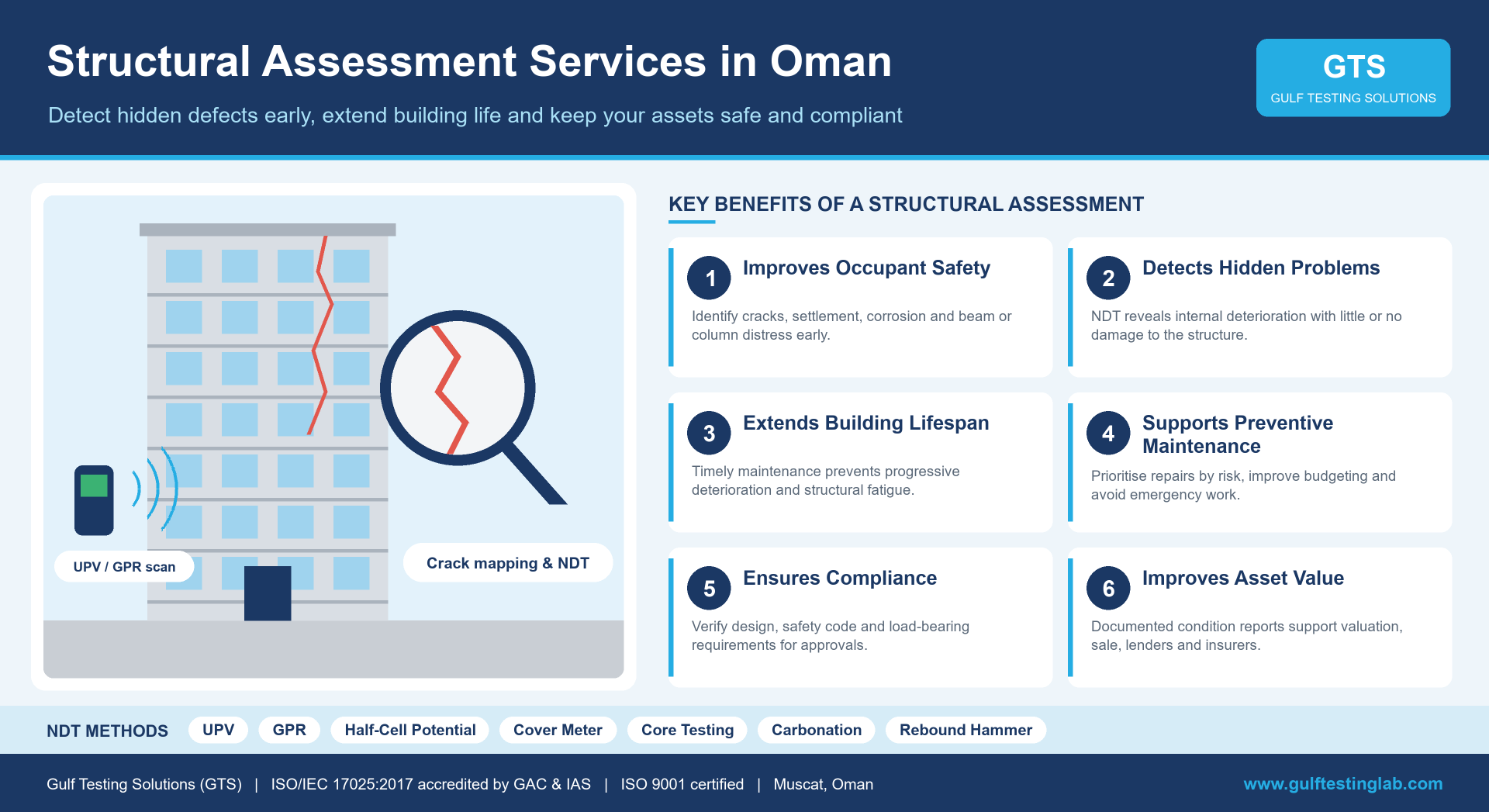
Key Benefits of Professional Structural Assessment Services
1. Improves Public and Occupant Safety
Safety is the primary reason for conducting structural assessments. Professional engineers identify:
- Structural cracks
- Foundation settlement
- Beam or column distress
- Corrosion
- Concrete deterioration
- Roof deflection
- Water damage
Early detection allows timely repairs before these issues become serious safety hazards.
2. Detects Hidden Structural Problems
Many structural defects are not immediately visible. Advanced assessment techniques such as:
- Ultrasonic testing
- Cover meter surveys
- Ground Penetrating Radar (GPR)
- Half-cell potential testing
- Infrared thermography
- Carbonation depth and chloride profiling
- Concrete core testing
can reveal internal deterioration with little or no damage to the structure. Early diagnosis significantly reduces repair costs.
3. Extends Building Lifespan
Regular inspections help maintain structural performance throughout a building’s service life. Timely maintenance prevents:
- Progressive deterioration
- Corrosion
- Concrete degradation
- Structural fatigue
This extends the usable life of valuable assets while delaying expensive reconstruction.
4. Supports Preventive Maintenance
Rather than waiting for failures, structural assessments support planned maintenance programs. Engineers can prioritize repairs based on risk, helping organizations:
- Reduce emergency repairs
- Improve budgeting
- Optimize maintenance schedules
- Minimize operational disruptions
Preventive maintenance is often far more cost-effective than reactive repairs. For example, a small crack that allows water ingress can lead to reinforcement corrosion and, over time, far more extensive and costly structural repairs.
5. Ensures Compliance with Engineering Standards
Many construction projects and existing facilities must comply with local regulations and international engineering standards. Professional assessments verify whether structures continue to meet:
- Design requirements
- Safety codes
- Load-bearing criteria
- Quality standards
- Owner and insurance requirements
Compliance also simplifies approvals for renovations and occupancy.
6. Supports Renovation and Expansion Projects
Before modifying an existing structure, engineers must determine whether it can safely support additional loads. Structural assessments help evaluate:
- Additional floors
- Equipment installation
- Interior alterations
- Industrial upgrades
- Building extensions
This ensures modifications are completed safely and efficiently.
7. Improves Asset Value
A professionally assessed and well-maintained property inspires confidence among buyers, tenants, lenders, and investors. Benefits include:
- Supports property valuation and sale
- Supports lender and insurer due diligence
- Faster property transactions
- Reduced liability concerns
Structural reports also provide documented evidence of a building’s condition.
8. Minimizes Operational Downtime
For industrial plants, factories, warehouses, and commercial facilities, unexpected structural failures can interrupt operations.
Routine structural assessments help identify potential issues before they affect production, reducing downtime and associated financial losses.
9. Enhances Risk Management
Professional assessments identify structural risks and recommend corrective actions. This helps organizations:
- Reduce legal liability
- Improve workplace safety
- Meet insurance requirements
- Strengthen emergency preparedness
- Protect employees and assets
A proactive approach to structural health reduces the likelihood of costly incidents.
Where Are Structural Assessment Services Used?
Professional structural assessments are widely used across multiple sectors, including:
- Residential buildings
- Commercial complexes
- High-rise towers
- Industrial plants
- Warehouses
- Schools and universities
- Hospitals
- Airports
- Bridges and flyovers
- Ports and marine structures
- Oil & gas facilities
- Power plants
- Water treatment plants
- Heritage and historic buildings
Each structure requires a tailored assessment approach based on its design, age, and operational conditions.
Technologies Used in Modern Structural Assessments
Today’s structural assessments combine engineering expertise with advanced technologies to deliver accurate, non-invasive evaluations. Common tools and techniques include:
- Non-Destructive Testing (NDT)
- Ground Penetrating Radar (GPR)
- Ultrasonic Pulse Velocity (UPV)
- Half-Cell Potential Testing
- Cover Meter Surveys
- Carbonation and Chloride Testing
- Concrete Core Testing
- Rebound Hammer Testing (surface hardness)
- Crack Width Measurement
- Digital Surveying Equipment
- Laser Scanning
- Drone Inspections
- Structural Health Monitoring Sensors
- Finite Element Analysis (FEA)
These technologies provide reliable data while minimizing disruption to ongoing operations.
Choosing the Right Structural Assessment Service Provider
When selecting a structural assessment company, consider the following factors:
- Experienced structural engineers
- Accredited testing laboratory support
- Advanced inspection equipment
- Expertise across multiple industries
- Compliance with international standards
- Comprehensive reporting
- Fast response and timely delivery
- Proven project experience in Oman
A qualified provider should deliver practical recommendations that help owners maintain safe, compliant, and long-lasting structures.
Structural Assessment Services from GTS
Gulf Testing Solutions (GTS) supports structural assessments across Oman through its NDT division and its laboratory, which is accredited to ISO/IEC 17025:2017 by GAC and IAS. Our team carries out condition surveys, non-destructive testing, core sampling and laboratory testing, and delivers clear reports with practical repair recommendations.
To arrange a structural assessment, visit www.gulftestinglab.com or contact our NDT team.
Frequently Asked Questions
How often should a building be structurally assessed?
There is no single rule. Many owners assess every few years, more often for older, coastal or industrial structures. An assessment is also advisable after a cyclone, flood or fire, and before any change of use or added load.
Does non-destructive testing damage the structure?
No. Methods such as ultrasonic pulse velocity, cover meter, half-cell potential and GPR are carried out on the surface. Where concrete cores are needed, they are small and the holes are repaired afterwards.
What does a structural assessment report include?
A typical report covers the scope and methods used, test results, the condition of each structural element, the likely causes of any defects, and prioritised repair or strengthening recommendations.